Have you ever experienced the aftermath of water damage in your home? The initial shock of seeing water-drenched belongings is often quickly overshadowed by another concern: the potential for mold growth. But how can you effectively prevent this unwanted invader from taking root in your space?
Water damage can stem from various sources—whether it’s a leaky roof, a burst pipe, or even severe weather. Once the water recedes, many homeowners are left grappling with not just the physical damage, but also the looming threat of mold, which can develop in 48-72 hours if the conditions are right. Understanding the importance of swift and proper action is crucial for protecting both your property and your health.
In this article, we will delve into effective strategies and tips on how to mitigate mold growth, ensuring your home remains a safe and healthy environment in the wake of water damage.
Steps to Prevent Mold Growth
Water damage can lead to significant issues in homes and buildings, particularly when it comes to mold growth. Understanding the critical steps to take after water damage is essential to prevent mold growth and ensure a safe living space.
Evaluate the Extent of Water Damage
Before taking any action, it’s crucial to assess how severe the water damage is. Check all areas affected, including ceilings, walls, floors, and any personal items. Knowing the scope will help determine the necessary course of action.
Identify the Source
Identify what caused the water damage, whether it’s from a leak, flooding, or a broken appliance. Addressing the source of the water is essential to prevent further damage and mold growth.
Remove Water Immediately
Whether it’s a small amount of water that you’re able to remove or a lot of water that requires help from a restoration professional, it’s critical to remove it immediately. The sooner you remove the water, the lower the risk of mold development. If you’re handling the accumulation of water DIY style, a wet vac or a sump pump can help.
Dry the Area Thoroughly
Use fans and dehumidifiers to speed up the drying process. Aim for a humidity level between 30-50% to inhibit mold growth. By drying the area and lowering humidity levels, the chances for mold growth decrease tremendously.
Prevent Future Water Damage
Conduct regular inspections of plumbing, roofs, and gutters to catch potential issues before they lead to significant water damage. Consider investing in waterproofing measures for crawl spaces and installing sump pumps if you live in high-risk flood areas.
Why is Mold Prevention Important?
Mold prevention is crucial for maintaining a healthy living environment and safeguarding both physical well-being and property value. Mold can cause a variety of health issues, including respiratory problems, allergies, and skin irritations, particularly in sensitive individuals such as children or those with compromised immune systems.
Mold can lead to structural damage in homes and buildings, compromising the integrity of walls, ceilings, and foundations if left unchecked. By implementing effective mold prevention strategies, such as controlling humidity levels, ensuring proper ventilation, and timely addressing leaks or water damage, individuals can create a safer space and reduce the risk of expensive remediation costs in the future. Thus, proactive mold prevention plays a vital role in health, safety, and financial protection.
Common Questions
Below are frequently asked questions regarding mold prevention after such incidents, along with insightful answers to help guide homeowners, property managers, and business owners.
While no material is completely immune to mold, certain materials are less prone to mold growth. For instance:
– Non-Porous Surfaces: Metals, glass, and certain plastics are less likely to harbor mold.
– Mold-Resistant Drywall: This special drywall is designed to resist moisture and mold growth better than conventional drywall.
Mold can often be recognized by:
– Visual Inspection: Look for discoloration on walls, ceilings, and floors, which may appear black, green, or white.
– Odor: A musty smell could indicate hidden mold, even if it’s not visible.
– Surface Testing: Use mold detection kits available at hardware stores for more thorough testing.
Ongoing moisture control is key to preventing mold. Here are some tips:
– Maintain Indoor Humidity: Use a hygrometer to monitor humidity levels, aiming to keep them between 30-50%.
– Fix Leaks Promptly: Repair any plumbing leaks or issues with your roof, gutters, or windows immediately.
– Implement Proper Ventilation: Use exhaust fans in bathrooms and kitchens to reduce humidity and promote air circulation.
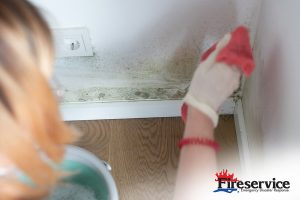
For extensive mold growth or if you have underlying health issues, hiring a professional mold remediation service is recommended. They have the tools, expertise, and protective gear to safely remove mold. For smaller patches, you can effectively use a mixture of water and detergent or a 10% bleach solution; however, always ensure proper ventilation and use protective masks and gloves.
Your Mold Remediation and Prevention Team
Fireservice is dedicated to ensuring that your home or business remains a safe and healthy environment. With a team of skilled professionals, we specialize in identifying, removing, and preventing mold growth, addressing the problem at its source. Our comprehensive approach not only includes thorough inspections and effective remediation strategies but also emphasizes proactive measures to eliminate conditions that lead to mold development.
At Fireservice, we understand the health risks associated with mold exposure and are committed to providing our clients with the highest quality service and peace of mind, helping you protect your property and loved ones from mold-related issues. If you discover mold in your home or business, don’t hesitate to contact us today.